David Blyth - Film Director
 
David in the studio making Our Oldest Soldier
David Blyth editing the acclaimed 2002 TV documentary ~ Our Oldest Soldier

Menu | Articles

davidblyth.com shop

Music for Dungeons
by Jed Town

Click to purchase
NZ$22, including postage


Track sampler
CD Cover Music for Dungeons
Jed Town's Music for Dungeons is original, haunting and evocative. Parts of it feature as the soundtrack of Bound for Pleasure. Great ambient chill out relaxation.
Bound for Pleasure DVD

NZ$ 40 includes NZ postage

NZ Purchasers: can now pay by pago.co.nz. Please contact us with your address by email, we will send simple safe payment instructions.


Bound for Pleasure DVD
David Blyth's fascinating documentary about the New Zealand suburban B&D scene. Why do "normal people" visit B&D dungeons, interviews with Mistresses, Masters and Slaves.

Projects

News TV NEW TV3 Documentary The Age of Aquariums
In Production Web Production News Digital Wallpaper

Films

Feature History David Blyth filmography Film CV
Feature History David Blyth CV (Text) Film CV
Available TV TV Documentary NZ B&D Culture Bound for Pleasure
Produced TV TV Documentary NZ War Hero Our Oldest Soldier
Available DVD Living Aquarium with Jed Town Fish Tank Telly

Releases

Available Music Ambient CD Masterpieces Jed Town
Available Film a small life Michael Heath

Amazon Shop

NEW
Amazon DavidBlyth.com select engine Directors

Communicate

EMail Contact David Blyth
EMail Contact davidblyth.com
EMail Contact Webmaster
EMail Contact Payments
Categories 
Le Quesnoy    Angel Mine    Featured    Awards    Video    Links    

Also attending the 90th Anniversary celebrations of the Liberation of Le Quesnoy are David's father and sister.

Link to Le Quesnoy site

Family Album

Les Quesnoy November 2008

  • Photo one, family group at Le Quesnoy Railway Station, which my Grandfather helped to Liberate on November fourth 1918.
  • Photo two Mayor Paul and myself, Paul is Mayor of Le Quesnoy
  • Photo three My Grandfathers beret on display at the Le Quesnoy Town Hall
  • Photo four Group photo of Le Quesnoy Conference on final day..
  • Photo five Mayor Raymonde Dramez and myself in the Square named after my Grandfather in Beaudignies, nearby Le Quesnoy.
  • Photo six A portrait of my Grandfather in the Town Hall in Beaudignies

Our Oldest Soldier

We just received a newspaper cutting of an article reporting the Le Quesnoy engagement of Nov 4 1918 - a real historic find. Thanks to Andrew who sent it to davidblyth.com - he said:

"I think it was interesting how it was reported especially about the British aeroplane dropping Messages and the NZ commander sending two parties, both with German officers, pointing out the futility of further bloodshed.  And how two War Correspondents were quoted.  At the start of the Article was Mr Philip Gibbs and at the end Mr Beach Thomas.  There is also a name for that famous drawing - Matania."


Categories 
Le Quesnoy    Angel Mine    Featured    Awards    Video    Links    
onfilm magazine

Interview: Blyth spirit May 2008

On the occasion of the 30th anniversary of his first feature film, Angel Mine, writer/director David Blyth discusses his career to date

What first inspired your interest in cinema and encouraged you to begin making films yourself?
Well the very first film I remember seeing in a cinema was the wonderful poetic children’s film The Red Balloon. The film that really talked to me and sent me on my journey into filmmaking was seeing Luis Bunuel’s Discreet Charm of the Bourgeoisie at Auckland’s Lido Cinema when I was about 17. Bunuel’s seamless ability to move between reality and dream fascinated me. I was hooked.
Circadian Rhythms, a 14-minute film shot in black and white, grew out of watching films such as the expressionist The Cabinet of Dr. Caligari and in particular Luis Bunuel and Salvador Dali’s collaboration on the short film Un chien andalou, a film I watched multiple times, trying to deconstruct its unconscious cohesion. Circadian Rhythms was a collaboration with Richard Von Sturmer and to this day I believe it’s unlike any other Kiwi short film.

Did you have any formal film education or training as such?

I have a Bachelor of Arts degree from Auckland University, which included doing Dr Roger Horrocks’ film course as well doing the practical film papers at Elam with Tom Hutchings.
In the mid ’70s there were no film schools in New Zealand. My training came from watching lots and lots of films. Discovering different directors such as Rainer Werner Fassbinder, with dynamic cinematic style, unconsciously assimilating the language of film.

What were the circumstances by which you came to make Angel Mine at the age of 22 in 1978?

One of Auckland’s film characters from the past was Jack George, whose film studio was in Pollen Street in Grey Lynn. Jack had the black and white processing machine that processed the 16mm Ilford Fp4 black and white film stock for Circadian Rhythms. He told me that Agfa were about to introduce a new 16mm colour newsreel reversal stock into the New Zealand market, so I approached Agfa with a proposal and they agreed to supply the reversal stock for free.
Ultimately Agfa had decided not to introduce the new stock into NZ when I shot Angel Mine, so in the end I had to send all the exposed film in one box to Belgium to be processed.
Shooting the film blind with no rushes was not an ideal situation but it was free and enabled Angel Mine to be made.
In those days the funding body was called the QE2 Arts Council. I got $5000 from them on the basis of a treatment for Angel Mine and them having viewed Circadian Rhythms, which by then had been selected for the Auckland, Wellington and Sydney Film Festivals.
After he read a proposal for the film, I also received money from a benefactor whose letterhead depicted a giraffe’s head – he liked people who stuck their head out. And I received a small amount of funding from Montana Wines, thanks to a promotions manager who was very sympathetic to the arts...
I met Warren Sellers who had just come off working on [historical television series] The Governor as the production designer – he was full of enthusiasm and, incredibly for me, took me seriously and put together a real film crew that included DoP/camera operator John Earnshaw.

Am I right in thinking the Interim Film Commission funded Angel Mine’s post-production?

Yes – while I had raised enough money to shoot the film, I couldn’t afford to complete it with a professional editor. At about the exact moment that I realised I had the opportunity to snare an editor, Philip Howe, the Interim Film Commission chaired by Bill Sheat was announced in the newspapers. I went to Wellington, and at John O’Shea’s Miramar premises, I showed the IFC a selection of footage from Angel Mine, which they loved. The Interim Board gave me approximately $19,000 to edit and complete the film, including a blow up to 35mm from 16mm...
I was definitely a beneficiary of a new institution that had not yet formulated funding guidelines. I believe it was my youthful enthusiasm and the unexpected timing of me being at the IFC’s first ever meeting, as well as there being some very compelling moving images on display.
Today a film like Angel Mine would not get past the New Zealand Film Commission’s assessment systems.

There was a furore surrounding Angel Mine’s release, with the creation of the special "R18-Contains Punk Cult Material" rating and so on – how did the commission react to what was presumably some unwelcome attention?

Yes, there were questions in Parliament and the Minister of Arts, Alan Highet, took some flack. The Commission, I’m sure, also picked up the fallout from the Minister and, of course, [contemporary morals campaigner] Patricia Bartlett had a go. Really, it was the shock that sex could occur in NZ-made films – far too close to home.
Ultimately the Film Commission stood by the film and it’s in the NZFC’s film catalogue to this day.

Thematically the film seems to be a pretty resounding rejection of suburban materialism; was the exploding of conventional narrative in the film also an expression of that sentiment?

Angel Mine has a unique story structure. Auckland University had opened my mind to our society’s headlong dive into materialism, alienating us from nature and taming our unconscious freedom to connect with our inner selves with increasing control through industrialisation and urbanisation.
I wanted to approach the story with an unconventional but very economic central concept. The young couple would play most of the different roles in the film themselves. I focused on the creation of false needs (commercials selling products) and I have my young couple play with and against the commercial stereotypes in their enticement towards more materialism.

Bearing in mind it was 30 years ago, is there any particular memory from the shoot that kind of acts as a signifier of the whole experience for you?

The Pakuranga Fire Brigade watching in awe as they sprayed water on [female lead] Jennifer Redford while she danced around the family clothesline. The image of Jennifer dancing around the clothesline is the key suburban metaphor for Angel Mine.

Is there anything in particular you remember especially enjoying about making Angel Mine?

I really enjoyed the opening sequences of Jennifer sitting naked on a white porcelain toilet on North Piha’s black sand beach looking out to sea while [male lead] Derek Ward emerged from the surf, dressed in a sailor suit, later segueing into giving Jennifer the new adult-strength drug for sexual problems: Angel Mine.[laughs] I was spoofing Viagra 20 years before it was invented.

How about what you least enjoyed?

Well, part of the beach scene involved a helicopter shot sweeping along North Piha beach to Jennifer on the toilet. As the helicopter was turning around we hit an air pocket and dropped like a stone for what seemed like ages. It was at that moment I fully understood the saying about there being no atheists in foxholes as I saw my life go down the toilet.

What are one’s options if one wants to watch Angel Mine now, beyond going to the NZ Film Archive?

Currently the options for obtaining copies of Angel Mine to view are limited to say the least, but good news could be around the corner. There is currently a proposal in front of the NZFC to release all three of my Film Commission-funded features – Angel Mine, Death Warmed Up and Grampire – on DVD.

When did you last watch Angel Mine and how do you think it holds up, both in terms of your career and in the context of the NZ cinematic canon?

About a year ago a young film historian who lives on the Gulf Coast of Mississippi in the US somehow obtained a video copy of Angel Mine and asked permission to screen the film in his small film festival. He raved about the film and, after it was shown, said it was the most popular film at his festival. As a result I thought I had better have a look again. I am proud of Angel Mine – it’s an oddity with some fantastic surreal scenes that, again, make it unlike any other Kiwi film.
Recently Angel Mine has been invited, along with 30 other NZ films, to a major retrospective happening in July in Wroclaw, Poland that’s being curated by Dr Ian Conrich of the Centre for New Zealand Studies in London. I am attending that Festival as part of a round the world trip including the Fantasia Festival in Montreal, Canada and giving a masterclass at the Centre in London. Also, a book called New Zealand Filmmakers has recently been published, with a whole chapter on me by Stacy Abbott ( "The Nightmare within the Everyday"). So Angel Mine and its position in my career and the NZ film tradition is finally being analysed.

What was the local industry reaction to the film?

At the Civic Theatre premiere one wit suggested there was more film on Geoff Murphy’s teeth. Generally there was bemusement from the industry; the phone certainly didn’t ring off the hook with job offers.
The film did receive a theatrical release in Australia, though, playing in both Sydney and Melbourne.

Several years later you directed A Woman of Good Character. What drew you to this story?

A Woman of Good Character was originally a 50-minute television drama that starred Sarah Peirse in her first film acting role. The film was very well received and, again, it’s not-so-golden story of life for a young woman in early New Zealand is what struck a chord with me.
Grahame McLean, the producer, extended the length for the tele-film version, It’s Lizzie To Those Close. I prefer the original 50-minute version, which won Sarah Peirse best actress for her role at the Feltex Awards.

What was the inspiration for your next feature, 1984’s Death Warmed up?

A Michael Heath story treatment involving cryogenics. I had long been fascinated by the pseudo-scientific concept of being frozen at death and then being revived and thawed at some future date, brain and consciousness intact. We decided to work from that premise and developed the link into the traditional teenagers-in-jeopardy theme, involving nefarious activities on Waiheke Island.

How did your writing relationship with Michael Heath work on a practical level?

Michael and I have had a great working relationship over the years. I respect his deep understanding of humanity and storytelling, and his own visionary filmmaking. We both have a love of cinema and good food and this has stood us in good shape over the years.

How did you find the experience of getting the film financed by the NZFC?

Fantastic – lots of help and support from Don Blakeney (aka Scrubbs) and Lindsay Shelton. This was my first film with Murray Newey producing. Murray was not only professional but charming, and thus excellent at managing all aspects of the relationship with the Film Commission.

I understand that the funding was to some extent justified on the basis that it would help foster a commercial base for the industry?

Death Warmed Up was New Zealand’s first official horror film (thank god I’ve got something over Peter Jackson) and the NZFC logic at the time was that young people are the main cinema-goers, and young people like horror films, so why not make a New Zealand one.

Interestingly, the NZFC recently noted that horror films "generally ... do not do well at the box office and they have limited cultural value". Which is rather a reversal of the commission’s enduring view that there’s always a ready global market for horror movies. As to the genre’s cultural value, it’s certainly true there have been some disappointing local horrors in recent years that have no cultural resonance or thematic subtext whatsoever (something that’s arguably I think had more to do with their lack of box office success than an alleged downturn in the horror market), and have been made purely as a career move rather than out of any affinity of the genre. In contrast, it seems to me that you and Michael Heath used the genre as a way of unpacking your preoccupations, some of which Stacey Abbot argues, in her essay on you in New Zealand Filmmakers, are evident throughout your career...

Yes, I agree completely... We also stayed within the NZ landscape and unpacked those preoccupations within that context.

What was Death Warmed Up’s reception?

The film was described as not being released, but escaping. Death Warmed Up won the Grand Prix at the Paris Festival of Horror and Science Fiction at the Grand Rex in 1984.

What did it do for your career?

Well, it got me to Hollywood at 30 years of age. Having Death Warmed Up meant I could get an agent and thus be able to go to meetings for film directing jobs. Horror films were being made continuously on all funding levels in Hollywood at the time.
These days Death Warmed Up has "cult status" internationally and I find that, when I am submitting my recent documentary films to festivals, invariably the festival directors remember DWU and comment on it.

Did it lead directly to you making Red-Blooded American Girl in 1990?

Yes, the Canadian producer Nick Stiliadis liked the film – I met him at the American Film Market in Los Angeles when Death Warmed Up was being promoted there.

What was the experience of making the movie like?

I really enjoyed working with a Canadian crew in Toronto – very much like the NZ experience, and quite different from the crews on some of the American shoots.
It was great working with writer Alan Moyle, and it was a wonderful on-set experience to work with the actor Christopher Plummer.

What attracted you to the feature film Grampire in ‘91, which saw you teaming up with writer Michael Heath again?

Michael Heath had written the delightful and mysterious radio play Moonrise and, having just done vampire film Red Blooded American Girl with Christopher Plummer, I was really attracted to the idea of bringing the vampire mythology into the context and consciousness of the New Zealand landscape. Michael’s story provided that very mix.

What’s your enduring memory of making that movie? I presume working with Al Lewis of The Munsters fame was something of a highlight?

Well, it was fantastic being able to work with Al Lewis and New Zealand’s Dame Pat Evison. Both had had very successful careers and it’s always wonderful to hear the stories and soak up the wisdom. Plus it was wonderful to be working out on Auckland’s West Coast again. We shot at a number of locations around Piha and Kare Kare Beach.

Is it true that a lack of finance hobbled the movie in terms of the intended special effects?

Yes, at the eleventh hour the American money in Moonrise, as it was originally called, dropped out. The budget adjustments meant that many expensive special effects had to be dropped.

What kind of reception did the film receive?

The reaction to the theatrical release of Grampire was mixed, review-wise. The movie failed at the box office, which was a major blow to my career. This was also my third outing with the Film Commission and did not bode well for the future.

What are your feelings about the film now?

Grampire is a sweet, endearing film, beautifully shot by Kevin Haywood, with great performances from Al Lewis and Dame Pat Evison. I believe it’s a great movie for kids and look forward to a new generation of Kiwis experiencing it on DVD. Also don’t forget the talented young Milan Borich has grown up to become the lead singer of the band Pluto.

In general, with regards to all your credits, does your relationship with, and view of, your films change as the passage of time allows you to view them a little more objectively, or does the way you see them remain inextricably tied up with your memories of making them?

I find films like Circadian Rhythms, Angel Mine, Death Warmed Up, and Grampire far more amusing than I remember them being when I made them. Certainly time allows you to see the films more clearly and also reveals more of one’s own themes and obsessions, which you aren’t necessarily aware of at the time. And yes, of course, I still see my mistakes and the stuff-ups.

Red-Blooded American Girl II in ’97 and Exposure in 2000 strike me as examples of jobs-for-hire rather than vehicles for personal statements. If that’s the case, how much do you seek to inject your personal sensibility and preoccupations into such projects?

Red-Blooded American Girl 2 aka Hot Blooded was actually based on a script I wrote myself – a dominatrix road movie, staring Kari Wuhrer, that focused on issues that would be explored again in [documentary] Bound for Pleasure. With Exposure, which was a job for hire, I tried to inject my own personal sensibilities into the project as I was attracted to the story, but the straight-to-TV nature of the project inhibited that.

Bound for Pleasure – which I think of as your War Stories Our Mother’s Never Told Us but with, you know, dominatrices – really seems to represent something of a turning point, the ushering in of a new phase in your career, if you will. Without wanting to be trite, it does seem that your career has come full circle, with you returning to a more hand-made and personal type of storytelling after a period of working on more "professional" (and presumably less personal) project. Is that a valid observation do you think? If yes, what prompted this shift?

The feature film Exposure was a frustrating experience and ultimately did nothing for my career. I realised that I had lost touch with my own personal view of the world and needed to reconnect with my inner self and its desire to explore the realms of dream, desire and the unconscious. Documentary was a way of expressing that desire without having to tread that well-worn path of going to funding bodies for the finance before being able to make a film. Instead, I gave myself permission to make a film!
And yes, your observation is accurate, Bound For Pleasure liberated me and allowed a new phase of my filmmaking career to begin.

So how was Bound for Pleasure received?

Like Angel Mine, Bound for Pleasure was funded by myself to the post-production stage when, with Richard Driver’s help, a deal with TV3 was secured.
The documentary ended up having a number of versions to accommodate various world markets. The TV3 version was very well received and had great reviews, while a 52-minute version of the film sold to about eight countries, and a longer feature length version was released on video and DVD in New Zealand.
It received a special mention at the Golden Gate Festival and has been selected for Fantasia Festival in Montreal this year along with my latest doco, Transfigured Nights.

Our Oldest Soldier was even more personal, in a literal way. What was the particular significance of this project for you?

This documentary, my first, was an opportunity to tell my family story with its links with a far off French town called Le Quesnoy. What made this film so significant for me was I had interviewed my grandfather many years earlier. It was only upon his death, and the national realisation that the soldiers from the First World War had fallen silent, that my personal interviews with my grandfather became a national treasure.

What prompted you to make doco Age of Aquariums?

Age of Aquariums was a continuation of my interest in the many strands that obsession can take. I found it very relaxing being around water and needed a soothing sorbet after the rigours of the dominatrices documentary. It’s coming up soon on the Sky Documentary Channel.

Your most recent film is doco Transfigured Nights, which – based on the short synopsis I’ve seen – seems like something of a companion piece to Bound for Pleasure. What’s it about, what led you to make it, and what kind of reception has it been getting?

Bound for Pleasure’s success stimulated me to look deeper into the internet world of webcam. Minority groups have been the first to exploit the internet’s networking potential and I found the subjects for Transfigured Nights on the internet and made the whole film from my lounge.
It’s a documentary about male mask performance captured on internet webcam. The characters are from all around the world. Transfigured Nights is more experimental than Bound for Pleasure as I have tried to deconstruct the traditional documentary approach.
It premiered at the Lausanne Underground Film Festival in Switzerland in October last year. I attended the festival screenings and the film had a great reception. As I mentioned earlier, it’ll also be screening at Montreal’s Fantasia Festival in July.

So what’s your relationship with the NZFC like these days? The funding body is sometimes accused of writing off more experienced filmmakers and having a fixation on "fresh" talent. In your experience is there any truth to this view?

Like many other New Zealand filmmakers I have continued to submit feature film projects for funding, including two major projects since 2000 seeking production funding from the NZFC Board.
Certainly I got those three opportunities from the commission earlier in my career, but my relationship with the commission in recent years has become very low key.
Looking back over the 30 years of the Film Commission’s existence reveals an incredible story of helping to grow a New Zealand film industry from scratch to where it is today, a respected part of the international film community.
The issue of only having a local market with a population of four million isn’t going away, and the limited government funding to the commission means that despite large numbers of projects on offer and in development with NZFC, only a handful of projects can be made each year.

What can you tell us about the projects you’re currently working on?

I am currently working on a new feature length, low budget horror script. The film i will not be conventional genre horror, more a continuing exploration of the unconscious worlds of desire and obsession. I aim to take the script on my overseas festival trip in July with the hope of finding money and a leading lady. I want to shoot the film later this year here in Auckland.

Anything else you’d like to mention?

Yes, can you please give my website a plug – www.davidblyth.com.


© Copyright Onfilm magazine May 2008

Article republished with permission


Categories 
Le Quesnoy    Angel Mine    Featured    Awards    Video    Links    

Pandemonium

Pandemonium
Pandemonium is a new film project written by David Blyth.

This is a new work following in the heels of Angel Mine and Bound for Pleasure. But this time the rubber gloves are off. David's film tells the story of a Dominatrix with a difference.

Be warned, no dark secret is safe - Pandemonium is coming!

Heroes of New Zealand Film

New Zealand has become known as Middle Earth as film maker and self confessed "Hobbit" Peter Jackson returned, a world conquering hero. New Zealand is very proud of its world class heroes.

David Blyth is a contemporary of Peter Jackson. Indeed, David's first horror film, Death Warmed Up had fans running and screaming in the aisles about the same time Bad Taste was being made and Gremlins came out. Death Warmed up charmed the international festival circuit, see what Alejandro Jodorowsky said about his encounter with David and his high regard for this scarey film.

David went on to make Hollywood productions including Mighty Morphin Power Rangers and continued to make great New Zealand film, including Kahu and Maia - starring the Maori actor Cliff Curtis.

David Blyth has recently collaborated with maverisque muso Jed Town in a stunning collaboration, Fish Tank Telly.

Check it out. It's a new wave of fish tank videorama set underwater and brilliant music.


Cult credentials

What makes a director a "cult director". Early films are treasured and sought after due to critical acclaim, shock value or notoriety. Although each of David's projects is complete in itself, there remain threads which tie Angel Mine with Bound for Pleasure and cult favourite Red Blooded American Girl . Murder links Death Warmed up and Exposure . With several offers and projects underway we expect to add to the Cult Credentials gallery.

Death Warmed Up Death Warmed Up

UK video cover

David Blyth's classic horror film Death Warmed Up is coming back to life, watch for an American DVD release of DEATH WARMED UP is coming soon! You can usually get the VHS from our Amazon links below which are now genuinely hard to find. A hugely successful film with international multilanguage releases, it had many different covers. Here are a selection of some of our favourites.

Death Warmed Up


German video cover

The blood shines on the menacing face of the Red Edition.

What other editions were there?


Death Warmed Up

Japanese video cover

Careful with that axe...dept

Death Warmed Up was a very popular film in Japan, called My-Doku.

Thoughtful operation or was this a combination of Brian Dead and The Thinker?


death warmed up - french poster

French film poster.

Legendary film director Alejandro Jodorowsky was on the French festival jury that awarded Death Warmed Up - you can read what he had to say about David Blyth here.

Who is the actor featured on the French/USA cover? email me your answer.

Have you an old cover of Death Warmed Up? If you email your cover of Death Warmed Up we can add it to this little collection.

Categories 
Le Quesnoy    Angel Mine    Featured    Awards    Video    Links    

No 1 DOCUMENTARY (2002) Our Oldest Soldier

David's evocative documentary Our Oldest Soldier achieved the highest number of viewers of any New Zealand on Air funded program for the last year beating the nearest rival Country Calendar by 50,000 viewers. A remarkable achievement for a one-off-programme. John Keir, the producer announced. The programme was repeated on Easter weekend.

Mistress J by Raimund Lavendar

Bound for Pleasure AWARD

The Golden Gate Festival has selected BOUND FOR PLEASURE for its artistic merit.

"In addition to the awards of the Jury, the Committee of Art has distinguished your film due to its special artistic value."

Categories 
Le Quesnoy    Angel Mine    Featured    Awards    Video    Links    

Other Directors

YouTube is a growing phenomena with individuals posting home made films.


NEW Here is a clip of Jordorowsky talking about his film The Holy Mountain with rarely seen exerpts of Fando Y Lis and El Topo. It appears that a film studio is digitally remastering and rereleasing Jordowsky's films.
Here is a clip of Werner Herzog talking about how hard it is to succeed making films.
Categories 
Le Quesnoy    Angel Mine    Featured    Awards    Video    Links    

New Links

IMDB News

Frances Lynn is an English writer and film columnist. Frances is currently writing a horror comedy screenplay for NZ film director DAVID BLYTH and is writing "Disguise", a humorous novel about a reincarnation conspiracy.

Targ-it.com lists David, quotes this site alongside Tim Burton and Luc Besson.

Film Archive entry about AngelMine.

DigitalWallpaper.net creates wonderful DVDs with natural themes, brilliant ambient music by Jed Town.

www.NZBlues.com featuring New Zealand blues bands legends Windy City Strugglers and gospel stars in Jubilation.

Auckland Poetry fosters NZ writing and gives writers a place to get their work published on the web.

News-Directory.org / Magazines and E-zines - Magazines and E-zines Web Directory

www.echolist.com The Echolist online directory features a massive wealth of information, news and links about a wide range of topics for your edification.

Find your film at a cheap price with Kelkoo ... David Blyth. Death Warmed Up. Horror genetics is the subject for this hyped-up, over-the-top tale of fast action, gore and revenge. VHS/SUR: ...

Kiwi Sauce is a Dutch guide to wonderful products experienced in New Zealand.

Bound for Pleasure is mentioned in Richard Evan Lee's Edifying Spectacle, a weblog about sexuality.

A student of David Blyth it seems although the name is wrong, the films are all David's.

Martin Rumsby's article about experimental film making in New Zealand examines the role of critics. New Zealand film has "grown in a vacuum of curatorial silence". David Blyth is listed alongside his collaborator Richard von Sturmer, who wrote Circadian Rhythms and parts of Angel Mine.

The Big Idea notes the USA Theatrical release of Bound for Pleasure.

David Blyth has an entry in the Brussels International Festival of Fantastic Film, 2007.

      
  Intro       DVD Releases       News       Transfigured Nights       Feature       Festivals       Credits    

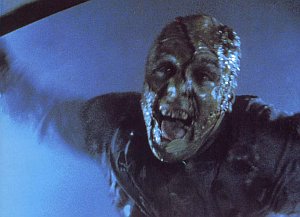
zombie from Death Warmed Up

Image from DEATH WARMED UP

David Blyth's early films include the horror classic Death Warmed Up (1984) and edgy contraversial social commentary in Angel Mine (1978). Finally, the DVD of Angel Mine has been released and is now available.

Now, with many international festival releases, David Blyth has carved a cult niche with digital film productions. He has released superb documentaries and feature films. We make available copies of David Blyth productions, DigitalWallpaper.net and DavidBlyth.com releases plus provide links to find some rarer films via Amazon.

WHAT'S NEW

BRAZIL FESTIVAL 4 films selected!

ANGELMINE NZ DVD RELEASE

TRANSFIGURED NIGHTS REVIEWS

SURREAL SHOWING Circadian Mind Games

HISTORIC EVENT Historic Le Quesnoy Conference

LONDON SHOWING Our Oldest Soldier in London

DVD RELEASE DVD Release of Death Warmed Up

FESTIVAL SELECTION Bound for Pleasure - picked for Fetisch Festival

NEW celebrity photos Montreal Fantasia Festival

FESTIVAL Angelmine in Wroclaw

REVIEW Angel Mine - Review

VAMPIRES Grampire at Vampire Festival

TRAILER Latest Transfigured Nights trailer

FESTIVALS Transfigured Nights FESTIVALS

BUY How to buy Transfigured Nights

INTERVIEW On Film - David Blyth Interview

Interesting

Warhol Superstars

DavidBlyth.com Amazon DVD selection

Interview with Jorodowsky and exerpts of his movies


"One of the great mavericks of New Zealand Film" - NZ Listener

Interview:
Radio New Zealand - National Radio - Angelmine

On March 31st David Blyth was interviewed on National Radio as Angelmine is re-released. Online purchase link below.

AngelMine DVD Release

David Blyth's first feature film Angel Mine is released on DVD and is now available. Enquire here now!

AngelMine is celebrating its 30 year Annivesary. This was the first film funded by the New Zealand Interim Film Commission.

"No locally made film has caused more hullabaloo since the advent of the State-sponsored NZ Film Commission than David Blyth’s Angel Mine..." - The Film Archive

Now you can finally get to see one of NZ's most provocative and ahead-of-its-time films on DVD, the film was first released in 1978 to shocked audienced, and was re-released on Friday, 13th February 2009.

Buy now only NZ$19.99 (postage and packaging included).


AngelMine On Set

David Blyth directs Jennifer Redford in AngelMine (1978).


The original censors notice issued in 1978


Bound for Pleasure
DVD now available

"...master's degrees in advanced bottom paddling; ...like Monty Python biddies gone bad. - New York Times

Bound for Pleasure now released on DVD (R18, Adults only, Sexual content may offend) after completing a festival run in New York. The DVD contains the full 73 minute cinematic release. On the edge mondo underground / ordinary lives in the guise of "television" documentary remains pure sexually deviant art. David Blyth's exploration of the weird is a remarkly human treatment of the discipline profession he found in the suburbs of Auckland. The festival film is now available on DVD Bound for Pleasure First Edition - SOLD OUT - more available shortly.... Warning: It may shock some viewers with its honesty.

EMail DVD enquiries here.

Discover a journey into the unknown. Order your DVD here - produced by davidblyth.com - an ILA Films release - exclusively available here - order today special price US$24 includes postage.

Warning: R18, Sexual content may offend.

"Intimate...revealing...extraordinar(ily) candid" -- SBS

"Realer than any reality show" -- Queen Divinia

Death Warmed Up

Stay tuned for more info on the NZ DVD release of David Blyth's classic cult horror movie starring Michael Hurst - DEATH WARMED UP. NZ legend Michael Hurst's first film was David Blyth's horror classic: Death Warmed Up

coming soon

Brazil Fantastic Festival

David Blyth has been invited to attend the

5th Fantaspoa International Fantastic Film Festival of Porto Alegre, Brazil.

David Blyth is attending the Festival - from July 3rd to July 19, 2009.

The Festival has selected the following titles:

David has also been invited to be a member of the Festival Jury and give a Film Workshop Masterclass.

The festival site is:
http://www.fantaspoa.com

48 Hours

David Blyth is currently a Judge on 48 Hours film festival held in Auckland May 2009.

ECHOES FROM THE PAST


Richard Lymposs (Whole of the Moon) / David Blyth (Death Warmed Up) / David Parry (Bonjour Tomothy). Auckland ANZAC Weekend 2009

at Lausanne

Warhol Superstars

DAVID: While at the Lausanne Underground Film Festival I had the good fortune to see some of the early 60's Andy Warhol films, including Vinyl and a two projector screening of Chelsea Girls. The festival invited three of the original "Warhol Superstars" , Mary Woronov, Holly Woodlawn and Bibbe Hansen who before the screenings revealed how things really were with Warhol in the Factory days, fascinating stuff.
Holly Woodlawn
photo 1: Holly Woodlawn - the inspiration for Lou Reed's iconic song "Walk on the Wild Side"

Holly Woodlawn
photo 2: Bibbe Hansen Mary Woronov ( back ) Holly Woodlawn

Image credits: Photographer: David Blyth.


NZ Listener

New Zealand's respected arts and entertainment magazine carried a major feature in a recent issue about David Blyth and his New York Times reviewed film Bound for Pleasure.

"Blyth has reinvented himself as a maker of low-budget documentaries that TV eats up."
- Philip Mathews in NZ Listener

Tranfigured Nights

Customer Reviews

This film is probably one of the best films I've seen, and I've seen a lot of really great films. It's on par with 'Waiting for NESARA,' as a film that can be watched over and over again, especially to show friends! The director of this film has an extraordinary career track record of documenting and creating some of the best films I've seen.

As a fan, I'm highly impressed! The wrapping scenes are pretty damn crazy. The housework scenes... I dunno, you just gotta see it. There is some really great footage that isn t in the trailer.

As a professional film producer, novelty hunter and mad scientist; I hope that the world will recognize the film for the following groundbreaking accomplishments:

  • Complete production done online - could have been created without leaving a single room, but has footage from almost every part of the Pacific Rim.
  • Mixing Media - a perfect balance of 'first person' screen capture, and direct digital capture of video streams.
  • Perfect Musical Score - a film like this really needs a musical score to capture the, uhh, well, 'individual beauty' of each of the documentaries subjects.

I'm hoping that Blyth will be remembered for these trend-setting achievements. Everyone I've shown this film to has applauded at the ending.

Worth every penny at $15.
- Nolan Farsistin, CA, United States

Available Internationally


Transfigured Nights is now available for international distribution on filmbaby.com

Transfigured Nights TRAILERS


Dread Central

Transfigured Nights is reviewed in this popular horror film weblog. Check it out here.

T r a n s f i g u r e d N i g h t s

2007 release

"Transfigured Nights" is a 48-minute experimental documentary that explores the wildly perverse, fetishistic pleasures of web cam mask performance.

Director David Blyth takes us into the cyber-homes of a variety of men who show their extreme-sexually charged online behind-the-mask personas...

From the Rubber-encased, Gas-masked MORE RUBBER PLEASE SIR, to the extreme 7-layered, gigantic boobed, and bound HOG-TIED, to the sensual asphyxiation bags of the doll-masked KUNIKO, to the forbidden and haunting Berkha-attired DEEBA, and the hysterically happy ex-Vietnam Vet goodtime gal MISS PIGGY, who wears Pig masks, and cocktail frocks, and twirls topless around her glamour-filled home.

The film, entirely captured from Internet sources, openly explores the new sexuality of the digital age ... and like forbidden videos its impact will be shocking for the honesty it portrays, and hopefully liberating to the world audience at large...


Transfigured Nights has been selected for the Darklight Film Festival in Dublin, Ireland.

Angel Mine - Review

A review of Angel Mine, which recently screened in Wroclaw Poland as part of the biggest New Zealand Cinema Retrospective ever..

Angelmine

Angelmine is David Blyth's second film release and a social commentary that renewed calls for more censorship when it was released in 1978 in New Zealand

Angelmine articles

Wellington 2006 screening

Reviews and director comment

Art New Zealand Article


CONTENT MAY OFFEND

On Wednesday nights October 2006 The Film Archive presented Content May Offend - a series of New Zealand Features notorious for the censorship controversies they caused.

FULL ARTICLE

Angelmine 30th Anniversary

March 2008 - 30th Anniversary retrospective in Wroclaw Poland festival

David Blyth's first feature film Angel Mine is celebrating its 30 year Annivesary. This was the first film funded by the New Zealand Interim Film Commission. Angelmine along with the director is going to attend a large retrospective of New Zealand films in Wroclaw Poland in July of this year.

The festival has been curated by Dr Ian Conrich, Head of the New Zealand Media Studies Centre at London University.

David has also been invited to give a Master Class at the Media Studies Centre while in London.

Angel Mine

From the season: Content May Offend

Part of the regular series: New Zealand Feature Project

Angel Mine, ILA Productions, 1978

35mm, 79 minutes, R18

Director/writer: David Blyth
Producers: David Blyth, Warren Sellars
Associate producers: Jennifer Jakich, Larry Parr
Production manager: Warren Sellers
Director of photography: John Earnshaw
Editor: Phillip Howe
Music: Mark Nicholas
Music performed by: Auckland Youth Orchestra, Peter Kerin, Suburban Reptiles

With: Derek Ward, Jennifer Redford, Myra De Groot, Mike Wilson

"No locally made film has caused more hullabaloo since the advent of the State-sponsored NZ Film Commission than David Blyth's Angel Mine... It has been the cause of renewed urgings to the Minister of Internal Affairs Allan Highet to tighten censorship law, and to the Government in general to carefully watch how the taxpayers' money is being spent in the new surge towards a developed local film industry. Porn watchdog Patricia Bartlett, in particular, has been assiduous in penning letters to Government leaders and newspapers... Angel Mine, which has been made on a miniscule budget of about $30,000 and blown into 35mm from original 16mm footage, is much more than all the 'put down' ballyhoo suggests. Sensitively perceived and realized, if somewhat short in some areas on technical expertise, it is clearly a director's piece. What it does is make a particularly strong statement about urban materialism and the corrosive nature of visual advertising in the context of the relationship - sexual and otherwise - of a suburban couple. Highly amusing as well as thought provoking, Blyth has extracted good performances from his actors Despite the relative youth of 22-year-old Blyth, Angel Mine is as mature and entertaining an analysis on this there as has emerged in film here.” — Mike Nicolaidi, Variety, 10 January 1979

"Angel Mine is an elusive and difficult film work to discuss. So far, after a brief major-cinema season, the critical response has been largely negative. One Auckland critic found the film 'about as erotic as a belch' and Stephen Ballantyne in the Listener shredded Angel Mine and referred to 'the banality of its assertions about suburban life'. But as a pointer to the critical contradictions Hamish Keith, writing one week later than Ballantyne and in the same journal rightly thought the film 'genuinely original'. I too found Angel Mine original and often arresting. There are few enough rewards for those of us who want to see the New Zealand film industry develop strongly and with imagination. We know, after Sleeping Dogs, that a professional and exciting thriller can be made here and Roger Donaldson must be given his due as a director of skill and energy. But Donaldson was working from a published novel, Smith's Dream His scope for originality was determined by the conventions he accepted. Since he directed from a given text and was intent on making a commercial success of Sleeping Dogs he had to produce a film with an accelerating forward drive, with a convincing climax. His problems therefore were problems of realism - the gun fights had to look authentic, the escape in the car thrilling. David Blyth on the other hand has set himself harder problems - he has to discover his form - and it is not surprising that he does not always succeed. On one viewing Angel Mine has the impromptu feel of a movie which evolved in the process of being made. Because there is no apparent story-line there is no necessary linear development in his film. Sleeping Dogs had a trajectory, a plot; Angel Mine has no plot - it circles around in search of itself and this can lead to the shallow critical response that it meanders, or that it is a mere series of vignettes. Blyth has the courage, the youth and energy, to make mistakes and any serious artist must be given the opportunity to make mistakes. In an important sense that is the fertile ground from which maturity springs. I'm glad the Interim Film Commission and the QEII Arts Council had the audacity to give Blyth financial aid on this project. The serious danger is that those organizations might take fright at the open and violent sexual encounters in the film. There is a graphic scene where the actors copulate. But within the context of Angel Mine this scene is more necessary than the commercially choreographed sequence in Sleeping Dogs. So too the final shots of lovemaking taken through an uncurtained landing window. Blyth here is supporting the thesis of Leslie Fiedler that in an emotionally and sexually immature society - our New Zealand - sexuality is inevitably linked with death fantasies. And the suburban couple only really make it in the form of their punk surrogates who have gunned the deep-frozen pair to death. Angel Mine is a worthwhile addition to our small score of local productions. ... So we have a new film which makes a serious though not totally successful attempt to break beyond the boundaries of our cinema-narrative conventions.” — Russel Haley, Islands 7, April 1979

"Angel Mine (which came with the warning: 'This film contains punk cult material!') signalled in celluloid the arrival of punk and met with the kind of controversy you'd expect and more. 'Angel Mine came out of nowhere and caught a lot of people by surprise,' says Blyth. 'Twenty years down the track I don't know whether it's so controversial. I've gone on and become far more middle of the road in terms of my film-making. Blyth was coming to the end of his time at Auckland University where he had become influenced by European cinema rather than Hollywood as well as the values that went along with the music friends in a band were espousing. 'We all came from the garage band. I was a garage film-maker. I used an old red Bolex and like the musicians didn't have any formal education. They just got instruments and started making noises and I got a camera and started pointing it around the room. I thought 'why wait to get experience?' Everything was fermenting at the same time. The very first punk concert at Auckland University was raising money for Angel Mine. The thing about the film is that it was shot for $13,000 or $14,000, which meant I didn't have to go to any of the authorities and have my script fettered. It was an attack on the great suburban dream of New Zealand, the whole focus on 'get a job, get a house and a mortgage', a whole philosophy which I guess punk was about questioning. Despite the low budget and the controversy that followed the film's release, many critics today, as then, have hailed Angel Mine as a superb piece of film-making.” — Mark Amery, Sunday Star-Times, 12 February 1995

"Angel Mine is a film about hanging in, in the city. Most feature NZ films have been about escaping the tangle of city life and its commitments! (eg Sleeping Dogs, Solo, Runaway, Landfall, Test Pictures). Angel Mine is based upon the principal that what enables us to stay alive in the city are our day dreams and fantasies, these function as our escape valve from the pressures of mass living etc. But what is going wrong is that our dreams and fantasies are being regulated and modified into mass-produced consumerable entities by the visual media, especially TV and films and TV commercials. They are giving us replacement dreams from our own escape routes which cater for our specific personal requirements NZ hasn't matured sexually yet! The country is still young and feeling its way tentatively - it hasn't got to the fast cars and slick confidence eg American show biz fantasy etc. It's still humping in the back of a Morris Minor, with one eye watching out for cops and the discomfort of grit off the shoes on the car floor grinding into the knees etc etc routines! There has been no erotic cinema in NZ because we haven't got past the mawkishness of an embarrassed thrash in the back of a car, before resuming our roles in a normal society where sex is for married adults in their own homes with the lights turned off of course! and the door locked! A rank generalisation - but you know what I'm getting at. Angel Mine therefore represents the coming of age, if you like, of the young couple but also of NZ cinema erotica next time!!” — David Blyth

Art New Zealand article

In an early edition of Art New Zealand you can find a very interesting feature on Angel Mine.

In the article there is a quote by David Blyth: 'I am very interested in the viewer-media transaction. All that enables us to survive in the cities are our fantasies, our dreams, our daydreams. What's worrying me though, is that these escape-routes have been closed off through the media, particularly television.'

Prophetic enough. But what of 'Angel Mine' - there appears to be a resurgence of interest in this truly "cult movie".

It is certainly interesting considering the inversion of roles that internet DIY entertainment and Handycam filmmakers who don't even leave the bedroom to start up their new venture in the garage. It's a whole new age of narcissism and there is no escaping it as we are hedged in to our narrow worlds and seek self definition in plasma TVs and mobile convergence of technology possibly limits expression rather than extends it. This phenomena is explored in David Blyth's new film Transfigured Nights

Angelmine

2005 Interview
Martin Rumsby Interview part 1 (June 2005)
Martin Rumsby Interview part 2 (June 2005)

CONTENT MAY OFFEND

On Wednesday nights October 2006 The Film Archive presented Content May Offend - a series of New Zealand Features notorious for the censorship controversies they caused.

FULL ARTICLE

David Blyth's first film Circadian Rhythms made in 1976 is screening at the Hastings Art Gallery in a special NZ surrealism exhibition. David made the film with the help of Richard Von Sturmer.

Richard von Sturmer and David Blyth 1976 in the Quad at Auckland University

BOUND FOR PLEASURE


Screening at Fetisch Film Festival
Fetisch Film Festival Web page
Sunday 23th of November 2008
Traum-Kino, Grasweg 19, 24118 Kiel, Germany

At the International Film festival in Wroclaw Poland

David Blyth and Vincent Ward at the 8.Era new Horizons International Film festival in Wroclaw Poland.
David Blyth was attending the major New Zealand Retrospective with Angel Mine. Vincent Ward had a retrospective of all his films along with the most recent Rain of the Children, which recieved the Festivals Audience Award. Rain of the Children is currently screening in cinemas around New Zealand.

Polish Kiwi film Retrospective

There is a retrospective of NZ cinema for an international film festival in Wroclaw, Poland, 17-27 July 2008.

This will be the biggest retrospective of NZ film ever, with 34 features (more than one tenth of all NZ feature films) and 46 shorts screening. In addition, 10 NZ filmmakers will be flying in to the festival - with the filmmakers attending (just one left to confirm): Vincent Ward, Roger Donaldson, Gaylene Preston, Christine Parker, Peter Wells, Oscar Kightley, Donogh Rees, David Blyth, Leon Narbey, and Rob Sarkies.

The festival will include introductions to screenings, and a panel discussion on NZ film. Craig Potton will present a photographic display, and there will be performances from Shonagh McCullough, Moana and the Tribe, Pitch Black, and Manaia. Details can be found at on this link.

The event is open to the public.

The Lausanne Underground Film & Music Festival 2007

The selection committee has announced that David Blyth's latest film Transfigured Nights has been selected to be part of their international documentary film program.

The festival takes place from October 10th to 14th 2007 in Lausanne, Switzerland.

New Years Day 2008 - Montreal Fantasia Festival 2008 announces a David Blyth double bill with the inclusion of documentaries, Bound for Pleasure and Transfigured Nights.

Hard on the heels of Transfigured Nights successful screening at the 2007 Lausanne Underground Film Festival in the French speaking part of Switzerland, French word of mouth has spread the word on David Blyth's films across the globe to French speaking Canada.


July 11th After Screening Party
Montreal Canada. Check out the guest list


Photos

Yoshihiro Nishimura/David Blyth director of Tokyo Gore Police, Fantasia Festival Montreal, Canada.

David Blyth/ Eihi Shinina of Audition and Tokyo Gore Police Fantasia Festival Montreal, Canada.

Frank Henenlotter/David Blyth director of Basket Case, Frankenhooker, Fantasia Festival Montreal, Canada.

sfsw.net

About SFSW.NET

SFSW.NET builds and runs a number of websites. The sfsw.net website includes a technical newsletter with the latest security information on viruses on the lose, tech tips on how to expand you website easily.

Sponsors Sponsors adverts are listed at the bottom of this page

TOP